Integrative Ayurveda for Anti-Microbial Resistance:

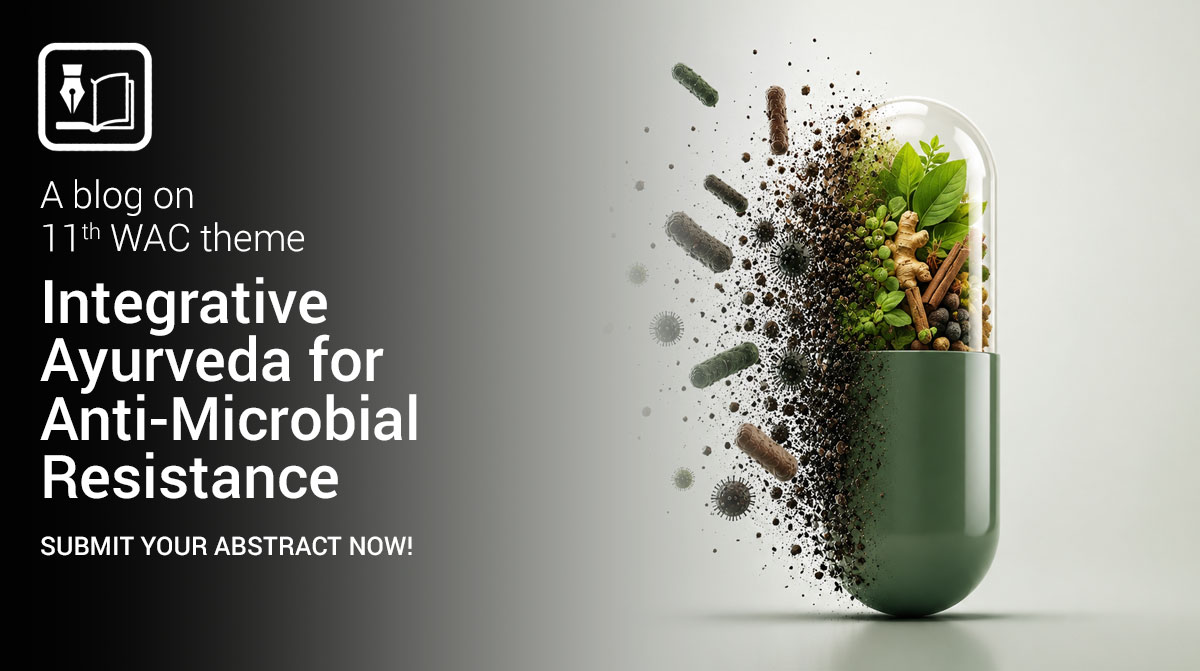
Integrative Ayurveda for Anti-Microbial Resistance: Harnessing Traditional Wisdom to Address a Global Health Crisis
Antimicrobial resistance (AMR) is one of the most pressing public health threats of the 21st century. The increasing inability of antibiotics, antivirals, antifungals, and antiparasitic medicines to effectively treat infections is undermining decades of medical progress. Common infections are becoming harder to treat, routine surgeries are riskier, and healthcare costs continue to rise. According to global health agencies, if left unchecked, AMR could cause millions of deaths annually by 2050 while placing an enormous economic burden on healthcare systems worldwide.
Recognizing the urgency of this challenge, the 11th World Ayurveda Congress & Arogya Expo 2026, to be held in Bhubaneswar, Odisha, India, from 10–13 December 2026, has identified “Integrative Ayurveda for Anti-Microbial Resistance” as one of its key scientific themes under the overarching theme “Integrative Ayurveda for Global Health.” This theme invites researchers, clinicians, microbiologists, pharmacologists, Ayurvedic physicians, public health experts, and policymakers to explore how Ayurveda can complement modern medicine in combating AMR through evidence-based, integrative approaches.
Understanding the Growing Threat of AMR
Antimicrobial resistance occurs when microorganisms such as bacteria, viruses, fungi, and parasites evolve mechanisms that reduce or eliminate the effectiveness of medicines designed to treat them. Misuse and overuse of antibiotics in human medicine, veterinary practice, and agriculture have accelerated this process.
- The consequences are far-reaching:
- Increased treatment failures and prolonged illness
- Higher healthcare costs and hospital stays
- Greater risk during surgeries, cancer therapy, and organ transplantation
- Spread of drug-resistant infections across communities and borders
The World Health Organization (WHO) identifies AMR as one of the top global public health threats, calling for coordinated action across healthcare, agriculture, research, and environmental sectors.
Ayurveda’s Preventive Approach
Ayurveda approaches health through prevention, resilience, and restoration rather than focusing solely on eliminating disease-causing organisms. Classical Ayurvedic principles emphasize maintaining equilibrium through balanced nutrition, healthy lifestyles, proper digestion (Agni), and strengthened immunity (Vyadhikshamatva).
By promoting the body’s natural defense mechanisms, Ayurveda aims to reduce susceptibility to infections and support long-term health. This preventive philosophy aligns with modern public health strategies that seek to decrease infection rates and reduce unnecessary antimicrobial use.
Strengthening Host Immunity
A healthy immune system is the first line of defense against infectious diseases. Ayurveda emphasizes individualized care through:
- Balanced diet and nutrition
- Rasayana (rejuvenation) therapies
- Lifestyle modifications Yoga and meditation
- Seasonal health practices (Ritucharya)
- Daily health routines (Dinacharya)
Scientific studies have shown that several Ayurvedic botanicals—including Guduchi (Tinospora cordifolia), Ashwagandha (Withania somnifera), Tulsi (Ocimum tenuiflorum), Amla (Emblica officinalis), and Turmeric (Curcuma longa)—possess immunomodulatory, antioxidant, and anti-inflammatory properties. While many of these findings are encouraging, further high-quality clinical research is essential to establish their role within integrative infectious disease management.
Integrative Strategies Against AMR
Integrative Ayurveda does not advocate replacing evidence-based antimicrobial therapy for serious infections. Instead, it explores complementary strategies that may help optimize patient outcomes while supporting antimicrobial stewardship.
Potential areas of integration include:
- Strengthening host immunity to reduce infection risk
- Supporting recovery during and after infections
- Reducing recurrent infections through preventive care
- Promoting rational use of antimicrobial medicines
- Exploring plant-derived bioactive compounds with antimicrobial potential
- Improving patient quality of life through holistic care
Such approaches may contribute to reducing unnecessary antibiotic exposure while complementing standard medical treatment under appropriate clinical supervision.
Ayurveda and Antimicrobial Drug Discovery
Nature remains an important source of therapeutic compounds, and Ayurvedic medicinal plants have attracted increasing scientific interest for their antimicrobial potential. Research is investigating herbs and polyherbal formulations for activity against drug-resistant microorganisms, biofilm formation, and microbial virulence factors.
Advances in phytochemistry, pharmacology, genomics, metabolomics, and artificial intelligence provide new opportunities to identify novel bioactive compounds inspired by Ayurvedic knowledge. Collaborative research between Ayurvedic experts and modern biomedical scientists may contribute to the discovery of future antimicrobial agents.
One Health and Antimicrobial Stewardship
AMR extends beyond hospitals and clinics. The widespread use of antibiotics in livestock, aquaculture, and agriculture contributes significantly to resistance. Addressing AMR therefore requires a One Health approach that integrates human, animal, and environmental health.
Ayurveda’s emphasis on preventive healthcare, sustainable agriculture, biodiversity conservation, and responsible use of natural resources aligns well with One Health principles. Integrative strategies can support antimicrobial stewardship while promoting healthier ecosystems and sustainable food systems.
Research Priorities
To establish the role of Integrative Ayurveda in addressing AMR, robust scientific evidence is essential. Priority areas for research include:
- Clinical trials evaluating integrative infection management
- Immunomodulatory mechanisms of Ayurvedic interventions
- Antimicrobial phytochemistry and natural product research
- Drug-resistant pathogens and herbal therapeutics
- Biofilm inhibition studies
- Veterinary applications and antimicrobial stewardship
- Public health interventions for infection prevention
- Artificial intelligence in antimicrobial discovery
- Translational and implementation research
- Health policy and cost-effectiveness studies
Interdisciplinary collaboration among microbiologists, pharmacologists, infectious disease specialists, Ayurvedic physicians, veterinarians, public health experts, and policymakers will be critical to translating research into practical healthcare solutions.
The Role of the 11th World Ayurveda Congress
The 11th World Ayurveda Congress & Arogya Expo 2026 provides an international platform to present cutting-edge research, exchange knowledge, and foster interdisciplinary collaboration in Integrative Ayurveda for Anti-Microbial Resistance.
By bringing together experts from medicine, microbiology, pharmacology, biotechnology, veterinary sciences, public health, and Ayurveda, the Congress aims to advance evidence-based solutions that address one of the world’s greatest healthcare challenges. Integrating traditional wisdom with modern scientific innovation offers promising pathways toward sustainable infection prevention, antimicrobial stewardship, and global health security.
Call for Papers
Researchers, clinicians, microbiologists, pharmacologists, Ayurvedic physicians, veterinarians, public health professionals, academicians, postgraduate scholars, and students are invited to submit original research papers and abstracts under the scientific theme:
- Integrative Ayurveda for Anti-Microbial Resistance
- Suggested areas include:
- Integrative approaches to infectious diseases
- Immunomodulation and host resilience
- Medicinal plants with antimicrobial potential
- Antimicrobial stewardship
- Drug-resistant pathogens
- Herbal pharmacology and phytochemistry
- One Health and AMR
- Veterinary applications
- Artificial intelligence in antimicrobial discovery
- Public health and implementation research
- Clinical trials and translational studies
Be part of the global effort to combat antimicrobial resistance through science, innovation, and collaboration. Submit your abstract to the 11th World Ayurveda Congress & Arogya Expo 2026 and contribute to advancing Integrative Ayurveda for a healthier, safer, and more sustainable future.